This post is part of our series on human-first technology adoption. To discover the complete framework for aligning your digital backbone with workforce satisfaction, check out our pillar post “The Human-Centric Digital Culture”.
This roadmap serves as a strategic guide for leadership to bridge the gap between technological advancement and human talent. We argue that the most successful organizations will re-architect roles. By focusing on a structured re-skilling pivot, fostering a culture of psychological safety through transparency, and redefining the human-in-the-loop model, leaders can transform fear into a competitive advantage. The goal is to move from a state where employees feel replaced by a tool to one where they feel empowered by a digital co-pilot.
The Sound of the Invisible Shift
When a leadership team announces, “We are using InitusIDP to automate our order-to-cash process”, they are often thinking about reduced latency and cleaner ERP records. However, to the employee sitting at the desk, those words sound like the ticking clock of a final countdown.
Automation anxiety is a documented psychological barrier to digital transformation. According to psychological research, the feeling of machine replacement triggers the same cortisol spikes as physical threats. In the absence of a clear narrative, employees fill the silence with worst-case scenarios.
The reality is that tools like InitusIDP do not eliminate the need for people, they eliminate the need for robotic behavior from people. The challenge for the modern executive is to manage this transition with empathy and strategic foresight. This blog explores how to navigate this roadmap, ensuring your team doesn’t just survive the integration, but thrives because of it.
I. Understanding the Anatomy of Automation Anxiety
Before we can solve the anxiety, we must understand its roots. Automation anxiety stems from three primary fears:
1. Skill Obsolescence: The fear that the hard skills learned over a decade are now worthless.
2. Economic Displacement: The direct fear of job loss or wage stagnation.
3. Loss of Agency: The feeling that a black-box algorithm is now making decisions once reserved for human judgment.
By identifying these triggers, leaders can tailor their communication. When deploying InitusIDP, the conversation should be about the human evolution that the tool enables.
II. The Re-skilling Pivot: A Three-Step Framework
Automation redistributes work. When InitusIDP handles the grunt work of extracting data from complex PDFs, it creates a vacuum of time. If that time isn’t filled with high-value tasks, the employee feels redundant.
Step 1: The Low-Value Task Audit
You cannot automate effectively until you know exactly what you are automating. Leadership must conduct a granular audit of daily operations.
• What to look for: Tasks that are repetitive, require no creative judgment, and follow a strict If-This-Then-That logic.
• The Goal: Show the employee that you are removing the drudgery, not the person. Highlight that a significant portion of their day was spent on manual transcriptions that added zero professional growth to their resume.
Step 2: The Skill Gap Analysis
Once the low-value tasks are identified, look at the uniquely human skills left behind. This is the human-centric advantage.
• Complex Problem Solving: A machine can extract an order, but it can’t negotiate a payment plan with a distressed long-term client.
• Strategic Empathy: AI can flag a data discrepancy; a human builds the relationship to resolve the underlying account issue.
• Interdepartmental Synthesis: Moving data is easy; understanding how that data impacts the broader supply chain requires cross-functional intuition.
Step 3: Intentional Re-training (The Career Pathing)
The customer service clerk doesn’t have to leave, they need to move up the value chain.
• Transitioning to Strategic Roles: Since the data is now perfectly synced via InitusIDP, the former clerk can now be trained to manage the relationship.
• Transitioning to Customer Success: Freeing up hours a week allows staff to move from reactive clerical work to proactive client engagement.
IV. Case Study
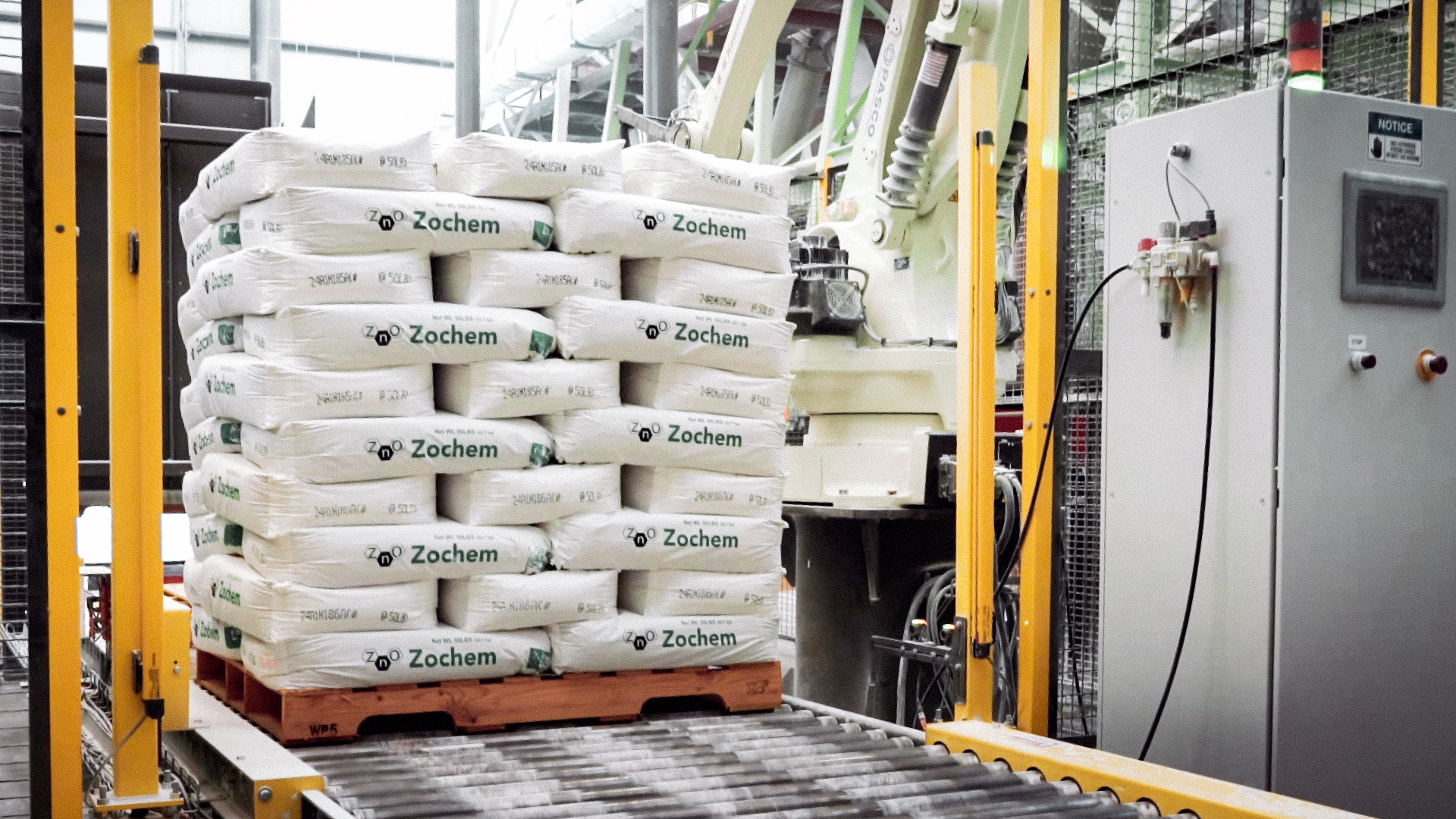
Zochem: From Clerical to Strategic
The transition from manual labor to high-value strategy is best illustrated by Zochem, a manufacturer that faced a common industrial bottleneck.
• The Requirement: Zochem needed to transform a complex, manual order-to-cash process. This manual system constrained growth potential and diverted skilled customer service team members into low-value clerical transcription work.
• The Solution: They implemented InitusIDP (Intelligent Document Processing powered by AI) to automatically extract and standardize data from incoming PDFs. This data then fed into a sophisticated, rules-based workflow within NetSuite.
• The Result: The impact was immediate and profound. In just 12 weeks, Zochem achieved:
◦ Near-perfect data accuracy.
◦ The elimination of over 90% of manual data entry for 3,000 annual orders.
◦ The elevation of Customer Service team members into strategic roles.
As Ken Williams, CFO of Zochem, noted,
“To deliver a transformation of this magnitude in just 12 weeks, using InitusIDP, is a testament to the focus and collaboration of both the Zochem and Initus teams. It sets a new standard for what we can achieve.”
Read the complete Customer Story here: Zochem: 90% Order Automation & 12-Week ROI with InitusIDP
V. Redefining the Human-in-the-Loop (HITL) Model
One of the greatest myths of automation is that it is set it and forget it. In reality, high-level automation requires human-in-the-loop (HITL) oversight.
In this model, the automation handles the volume, but the human handles the exceptions.
• The Exception Handler: When data doesn’t fit the pattern, the system flags it for a human. This reinforces the idea that the human is the ultimate authority.
• The Auditor: Humans are needed to ensure the automation is still aligned with business goals.
• The Optimizer: Who better to suggest improvements to the automation than the person who used to do the task manually?
VI. The Future Belongs to the Augmented
The automation anxiety roadmap is about ensuring our people aren’t trampled by technological progress. When we use tools like InitusIDP, we are investing in the potential of our human capital to do more meaningful work.
The transition from a manual workforce to an augmented workforce requires a leader who is as skilled in emotional intelligence as they are in digital strategy. By focusing on re-skilling, transparency, and the HITL model, you turn a perceived threat into a shared victory. It’s a leader’s role to ensure that the future workplace mindset is not humans vs. machines, but is rather humans + machines solving problems that neither could solve alone.